ChatGPT or Claude for business: which one should you actually pay for?
We use both every day. Here is an honest view of where each one earns its subscription, written for people who just want to pick one and get on with it.
Moonfleck · 9 October 2026 · 8 min read
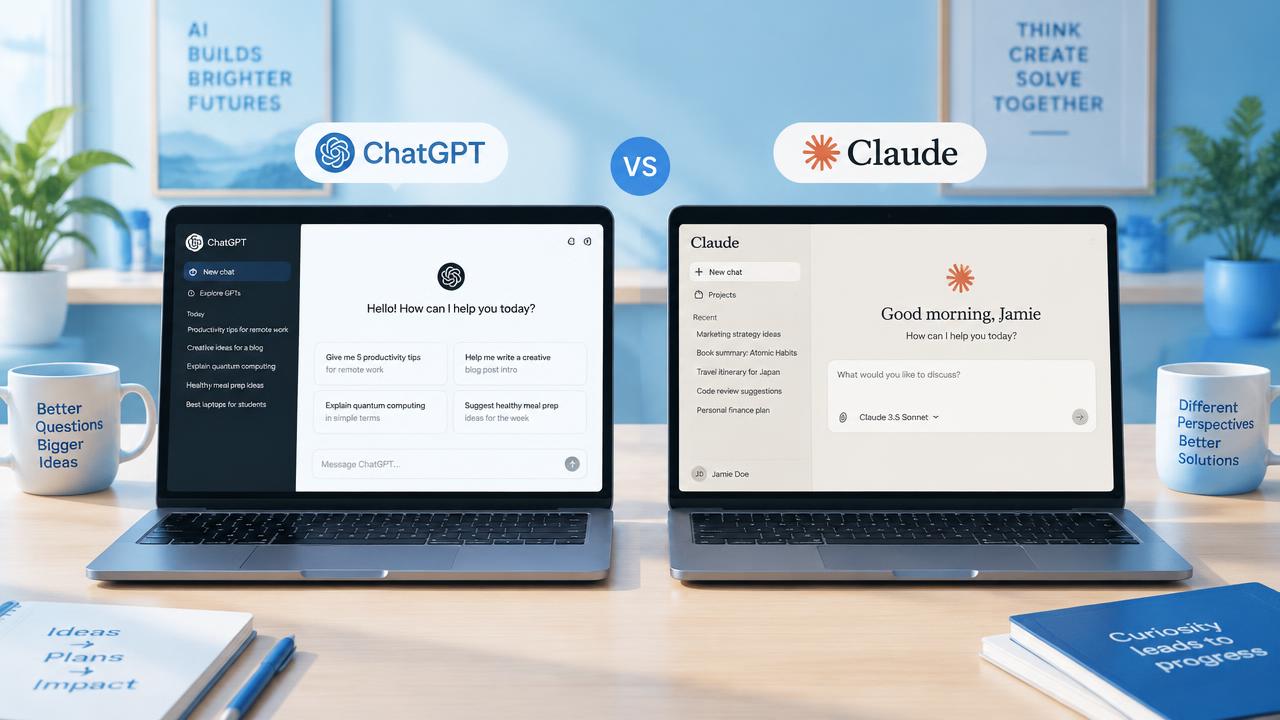
This is the question we get asked most often, usually by someone who has a free account with one, a paid account with the other, and a nagging sense they are doing it wrong.
The honest answer is that both are excellent, they overlap enormously, and the right choice depends far more on how your team works than on which one wins a benchmark this month.
Where ChatGPT tends to shine
ChatGPT is the generalist. It is the one most of your staff will already know, which counts for a lot. It handles images, voice conversations, scheduled tasks and connections to your email and calendar in one familiar place.
If you want one tool that everyone can use for a bit of everything, from writing a job advert to understanding a spreadsheet, ChatGPT is usually the easier sell internally.
Where Claude tends to shine
Claude is the one we reach for when the work involves long documents and careful writing. Feed it a fifty page tender, a lease, or a year of meeting notes and it stays remarkably faithful to what is actually in the material.
Its Projects feature is genuinely useful for a business. You load in your price list, your past proposals and your tone of voice guide once, and every conversation inside that project starts with that knowledge. Many people also find its writing sounds less like a machine, which matters when it is drafting things customers will read.
What the business plans add
Both offer team and enterprise plans, and for any business handling customer information you should be on one of them rather than personal accounts. The important differences from the personal tiers are that your conversations are not used to train the models by default, you get admin controls over who has access, and you get proper billing instead of a dozen staff expense claims.
How to decide in an afternoon
Pick the three tasks your team would use it for most. Run each one through both tools with the same instructions and the same documents. Show the outputs to the people who would actually use them, without saying which is which.
You will usually find a clear winner for your specific work. If the results are roughly even, choose the one your team already likes, because adoption beats a marginal quality difference every time.
Should you pay for both?
For most small businesses, no. Pick one for the whole team. The exception is when you are building automations behind the scenes, where we often use whichever model suits each step best. That is a decision for the system, not for every member of staff.
If you would like help choosing and setting it up properly, with sensible rules about what goes in and what stays out, that is a short piece of work for us.
Want this applied to your business?
A free half-hour conversation, and an honest answer about whether any of this is worth doing for you.
Contact usKeep reading

How much does it cost to build an AI powered app in the UK?
Quotes for the same idea can range from a few thousand pounds to six figures. Here is what you are actually paying for at each stage, and what a fair price looks like today.

AI explained in ten minutes: what a business owner actually needs to know
You do not need to understand how an engine works to drive a car. Here is the driver's guide to AI.

Five AI myths that are costing small businesses money
Some businesses are wasting money on AI. Far more are losing money by avoiding it for reasons that simply are not true.